
English
Views: 0 Author: Site Editor Publish Time: 2026-10-29 Origin: Site


Procurement managers, chemical engineers, and R&D formulators face high stakes when sourcing industrial ingredients. Pinpointing the exact functional additive for a complex formulation is crucial. The compound known as CAS 26468-86-0 serves as a highly effective nonionic surfactant and emulsifier. It belongs to the broader polyoxyethylene ether chemical family. Identifying this specific chemical is merely your first step. You must also rigorously evaluate its purity, regulatory compliance, and overall supply chain reliability. Ignoring these core factors often triggers unexpected formulation failures or costly production delays. This guide provides a complete roadmap for industrial buyers. We will thoroughly explore its chemical identity, key industrial applications, and proven quality evaluation frameworks. You will also discover essential vendor shortlisting criteria. These insights empower you to make confident, risk-free procurement decisions.
Defining the standard chemical nomenclature clearly prevents costly procurement errors. Industry professionals recognize this compound primarily as Isooctanol Polyoxyethylene Ether. The structural characteristics feature a strong hydrophobic isooctyl carbon chain. This chain connects directly to a hydrophilic polyethylene oxide segment. This dual-natured molecular design dictates its exceptional emulsifying capabilities. The degree of ethoxylation defines the exact physical state of the chemical. Lower ethoxylation yields easily dispersible liquids. Higher ethoxylation produces dense, water-soluble pastes.
Detailing the physical and chemical properties reveals essential baseline data. At standard room temperature, you observe a clear to slightly turbid liquid. The boiling point consistently exceeds 200 degrees Celsius under normal atmospheric pressure. The flash point sits well above standard flammability limits. This high flash point ensures safer industrial handling. The specific gravity typically hovers near 0.98. The pH value of an aqueous solution normally remains neutral.
Let us apply a practical decision lens here. You must carefully monitor for variances in these baseline parameters. An unexpectedly low specific gravity often indicates excessive solvent dilution. A lower flash point strongly suggests the presence of volatile residual chemicals. These deviations serve as immediate red flags. They clearly signal potential degradation or lower-grade manufacturing practices. You must reject batches displaying these anomalies.
Database cross-references provide a reliable truth source for formulators. We align technical data against international standards like the NIST or ECHA registries. You establish a verifiable baseline by checking these public platforms. You should always demand supplier documentation matching these global registries exactly.
Table 1: Baseline Technical Specifications
| Parameter | Expected Value / Range | Significance for Buyers |
|---|---|---|
| Appearance (25°C) | Clear to slightly turbid liquid | Indicates proper synthesis and lack of heavy contamination. |
| Specific Gravity | ~0.98 | Confirms concentration; low values signal solvent dilution. |
| pH (1% aqueous) | 5.0 - 7.0 | Ensures compatibility in pH-sensitive formulations. |
| Moisture Content | < 0.5% | Prevents hydrolysis and microbial growth during storage. |
| Flash Point | > 150°C | Ensures safe handling and compliance in heated processes. |
Formulation challenges frequently disrupt modern production lines. Poor pigment dispersion ruins final product color consistency. Slow phase mixing significantly delays continuous manufacturing cycles. Subpar wetting prevents proper substrate adhesion. Using CAS 26468-86-0 effectively solves these frustrating bottlenecks. It acts as an exceptionally powerful wetting agent. It forces distinct chemical phases to blend smoothly and quickly.
Let us examine the key industry verticals. The first major sector involves Cosmetic and Detergent Manufacturing. This compound functions as an essential emulsifier here. Formulators rely on it to stabilize complex oil-in-water mixtures. It directly impacts final wash performance and foam stability. It ensures heavy-duty detergents easily penetrate grease. In personal care products, it creates smooth, stable lotion textures.
The second major sector involves Industrial Coatings and Inks. It serves as a vital additive for improved pigment dispersion. It directly influences the final surface finish and long-term durability. You achieve better color consistency across large continuous batches. It prevents pigments from clumping during extended warehouse storage. The additive ensures smooth application on difficult industrial substrates.
The third sector includes Chemical Synthesis and Intermediates. It acts as a reliable building block for downstream chemical production. Engineers frequently modify its terminal hydroxyl group. They create specialized sulfate esters from this base. These new derivatives possess entirely different functional properties for specialized niche markets.
We must map these chemical features to your operational outcomes. Excellent solubility reduces your required dosage per batch. Superior chemical stability dramatically improves end-product shelf life. Faster wetting action reduces your overall mechanical processing time. You save considerable energy costs and increase your daily production yield. Formulators achieve superior results using fewer raw materials.
Reading the Certificate of Analysis requires strict attention. Do not merely look at the top-line purity percentage. You must scrutinize the fine analytical details. Check the precise ethylene oxide distribution range. Verify the exact hydroxyl value using standard titration methods. Confirm the pH falls within your required formulation window. Ensure the color metrics meet your visual standards.
Critical impurities often persist from the complex manufacturing process. Unreacted isooctanol is a very common industrial byproduct. Trace amounts of free polyethylene glycol can also remain suspended in the liquid. You must identify these elements quickly. These impurities negatively interact with other sensitive ingredients in your formulation. They can cause unwanted cloudiness in clear shampoos. They might alter the curing time of specialized industrial adhesives.
Moisture content directly impacts overall formulation stability. You should expect strict water content limits below 0.5 percent. Excess moisture degrades long-term storage viability. It also disrupts planned reactivity during downstream chemical synthesis. High water content encourages microbial growth in unpreserved storage drums. You must mandate moisture testing for every inbound delivery.
Grade selection requires a highly strategic approach. You must evaluate your true technical needs carefully.
You must actively avoid over-specifying your required grade. It completely wastes your limited procurement budget. Conversely, under-specifying risks catastrophic product failure. It ruins your brand reputation and invites expensive product recalls. Match the grade precisely to your final application requirements.
A grounded hazard profile prevents tragic workplace accidents. The Material Safety Data Sheet highlights specific handling risks accurately. This chemical presents notably low flammability risks under normal operating conditions. However, direct contact can cause moderate eye and skin irritation. Environmental hazards definitely exist for aquatic life upon massive accidental release. We do not exaggerate these inherent dangers. Standard PPE protocols provide sufficient daily protection. Workers should wear splash-proof goggles and nitrile gloves.
Storage infrastructure requires careful operational planning. You need well-maintained, temperature-controlled facilities. Keep the warehouse environment stable between 15 and 25 degrees Celsius. Proper ventilation prevents any minor vapor accumulation. You must use compatible industrial container materials. Stainless steel or high-density polyethylene works best for long-term storage. Avoid certain reactive metals like bare iron or copper. They actively cause long-term chemical degradation and unwanted discoloration.
Regulatory frameworks strictly dictate your global compliance strategy. Buyers operating in Europe must verify full REACH registration status. US buyers must carefully check the TSCA active inventory status. Asian markets require compliance with local chemical control laws. Your chosen supplier must provide up-to-date, verifiable compliance certificates upon request. You cannot risk regulatory fines from undocumented raw materials.
Implementation risk requires serious managerial attention. Introducing a new vendor for CAS 26468-86-0 triggers mandatory internal safety audits. You must update all internal handling protocols immediately. Your production team needs proper orientation on the new material safety parameters. Never skip these critical onboarding steps. Proper training ensures smooth integration into your existing production workflow.
Scalability completely determines your supply chain resilience. You must independently assess a supplier’s actual production capacity. Advertised availability often misleads optimistic buyers. You should request historical delivery data and recent audit reports. Ensure they can effortlessly handle your sudden volume spikes. A reliable supplier maintains sufficient raw material reserves to buffer market shocks.
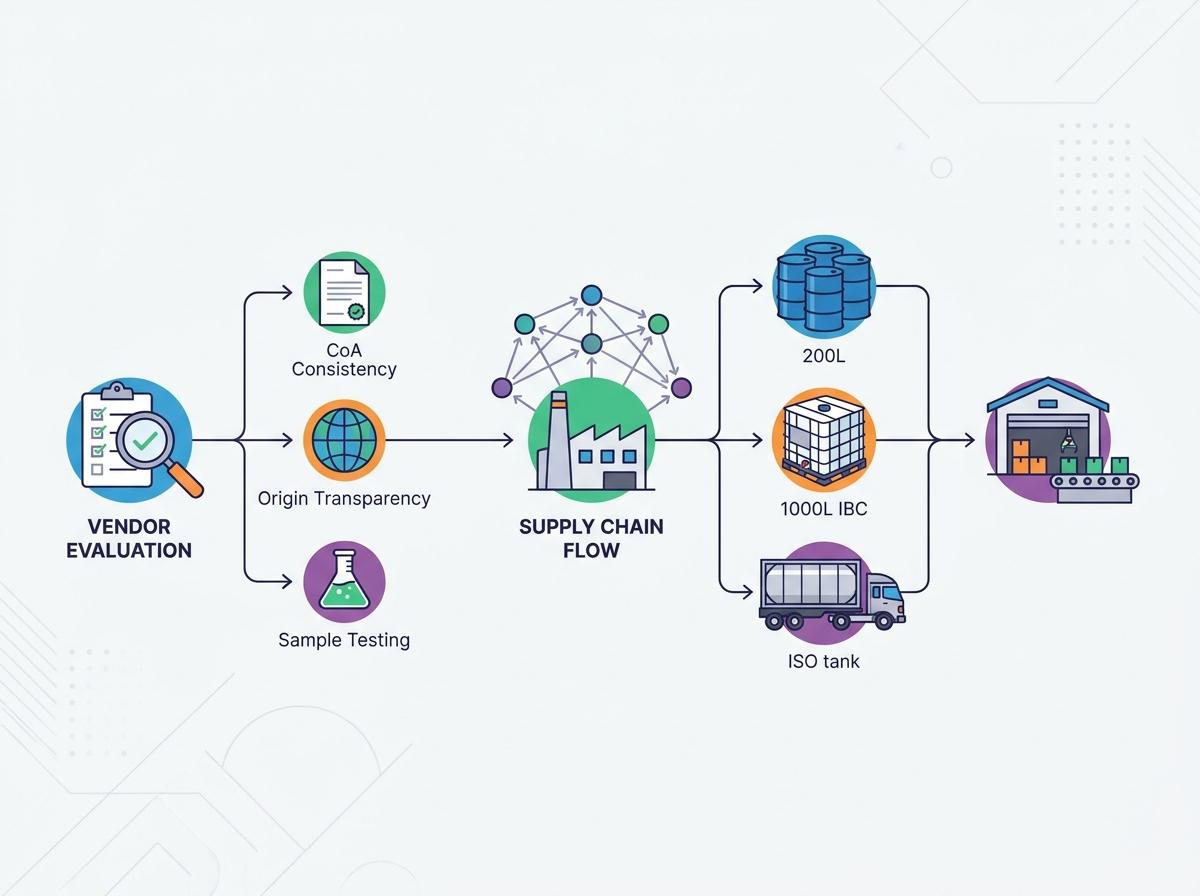
Packaging solutions directly impact your facility handling capabilities. Different bulk delivery methods offer distinct operational pros and cons.
Vendor shortlisting logic requires systematic and ruthless evaluation. You must ask these critical questions. Do they provide consistent, reliable batch-to-batch CoAs? Are they fully transparent about their exact manufacturing origin? Can they rapidly facilitate pilot-scale sample testing? Do they maintain safety stock for primary clients? You absolutely need these answers before locking in bulk Minimum Order Quantities.
Your immediate next-step actions are very clear. Recommend contacting the supplier today. Request a comprehensive Technical Data Sheet directly from their engineering team. Ask for a physical pilot sample shipped to your lab. Push these vital steps into your active procurement funnel right now. Early testing prevents future supply bottlenecks.
Effectively utilizing CAS 26468-86-0 demands uncompromising precision. You must match the chemical's technical profile strictly to your intended industrial application. You must also align it closely to your local regulatory environment. Overlooking either aspect guarantees operational failure.
Chemical procurement goes far beyond securing the molecule itself. It involves rigorously vetting the entire upstream supply chain. You secure reliable manufacturing outcomes by aggressively validating supplier credibility. Strong supplier partnerships build resilient production lines.
Take decisive action now. Prompt your procurement team to contact the sales or technical support department. Request a physical sample for immediate laboratory testing. Secure the full SDS for safety compliance review. Ask for custom pricing structures based on your specific grade and volume requirements. Protect your production timeline by partnering with a verified manufacturer today.
A: Standard industrial purity levels generally range from 95% to 99%. High-grade versions for cosmetics may exceed 99% purity. You must always check the Certificate of Analysis. The CoA confirms the exact active matter percentage. It also details the precise ethylene oxide distribution required for your formulation.
A: The expected shelf life typically spans 12 to 24 months. You should store it in a cool, dry, and well-ventilated area. Keep the temperature between 15°C and 25°C. Exposure to extreme heat or excess moisture accelerates degradation. Always keep the bulk containers tightly sealed.
A: Substitution is highly risky. While other polyoxyethylene ethers exist, they exhibit different hydrophile-lipophile balance values. These differences alter reactivity, phase stability, and viscosity. Furthermore, unauthorized substitutions can void your regulatory compliance. Always conduct extensive pilot testing before replacing this specific chemical.
A: You should request several critical documents. Always ask for the latest Safety Data Sheet. Request a detailed Technical Data Sheet for exact performance metrics. Demand a batch-specific Certificate of Analysis. Finally, secure relevant regulatory certificates like REACH declarations or TSCA inventory confirmations.


