
English
Views: 0 Author: Site Editor Publish Time: 2026-07-01 Origin: Site


High-value herbicides and pesticides often fail to deliver expected outcomes. This frustrating failure rarely stems from the active ingredient itself. Instead, poor leaf surface penetration is usually the hidden culprit. Budget-conscious applicators frequently seek household alternatives to reduce upfront costs. They hope a quick squeeze of kitchen soap will do the trick. However, mixing incompatible agents can neutralize your expensive chemicals. It can also damage your spraying equipment or cause unpredictable plant burn across your turf. Relying on untested home remedies introduces massive operational risks.
This guide breaks down the chemical realities of DIY alternatives versus purpose-built solutions. You will learn exactly why proper formulation matters for your application success. We provide a clear framework for selecting the right adjuvant based on efficacy, compliance, and application scale.
Applying expensive chemicals directly onto weeds does not guarantee control. You must consider the physics of surface tension. Many target plants have highly waxy or densely hairy cuticles. These biological defenses naturally repel water. When you spray a basic water-and-herbicide mixture, the droplets remain highly spherical. They bead up on the leaf surface. A gentle breeze or a slight angle will cause these droplets to roll off entirely. This bounce-off effect leads to severe product runoff and wasted chemical investment.
To overcome this barrier, you need a specialized chemical tool. A successful adjuvant fundamentally alters how liquids behave on a leaf. When formulated correctly, it achieves several critical milestones:
Skipping this vital component introduces severe hidden costs. Your initial application may show little to no results. You will then have to schedule repeat applications. This wastes valuable labor hours and doubles your chemical usage. It also increases the overall chemical load placed on the local environment. Proper adjuvants are not optional upgrades. They are operational necessities.
Many applicators mistakenly believe household dish soap serves the same function as a commercial adjuvant. Both products produce bubbles. Both seem to make water spread. However, the underlying chemistry tells a very different story. You must understand these chemical differences to avoid catastrophic tank mix failures.
Dish soaps contain anionic surfactants. These molecules carry a strong negative electrical charge. Manufacturers design them specifically to bind to oils and grease on your dinner plates. Professional herbicides often contain positively charged molecules. When you mix anionic dish soap into a spray tank, these opposite charges attract. The dish soap chemically locks up the herbicide molecules. This reaction neutralizes the active ingredient before it ever leaves the spray nozzle. Conversely, a dedicated Nonionic Surfactant carries no electrical charge. It successfully reduces surface tension without interfering with the chemical composition of your primary spray.
Household soaps are aggressive degreasers. When applied to plants, they strip away natural protective wax layers. This sudden removal exposes the plant to severe environmental stress. If you spray dish soap over a desirable lawn to kill a few weeds, you risk burning the entire turf. Commercial adjuvants temporarily alter the leaf surface to allow chemical entry. They do not aggressively strip the plant bare.
Standard detergents generate massive amounts of foam. Inside a pressurized spray tank, excessive foam becomes a serious mechanical hazard. It causes pumps to draw air instead of liquid. This leads to severe pump cavitation, pressure inconsistencies, and uneven spray patterns. Furthermore, dish soaps can break carefully balanced emulsions in agricultural formulations, causing chemicals to separate into useless sludge at the bottom of the tank.
| Feature | Household Dish Soap | Commercial Nonionic Adjuvant |
|---|---|---|
| Ionic Charge | Anionic (Negative) | Neutral (No Charge) |
| Herbicide Interaction | High risk of binding/neutralizing | Chemically inert; highly compatible |
| Foaming Level | Excessive (Damages pumps) | Low (Often includes defoamers) |
| Plant Safety | Strips protective cuticles (High burn risk) | Safe for turf when used per label |
DIY household soaps present a massive operational risk. They have a high likelihood of negating expensive chemical investments. Relying on dish soap is simply not a viable scaling strategy for any serious land management program.
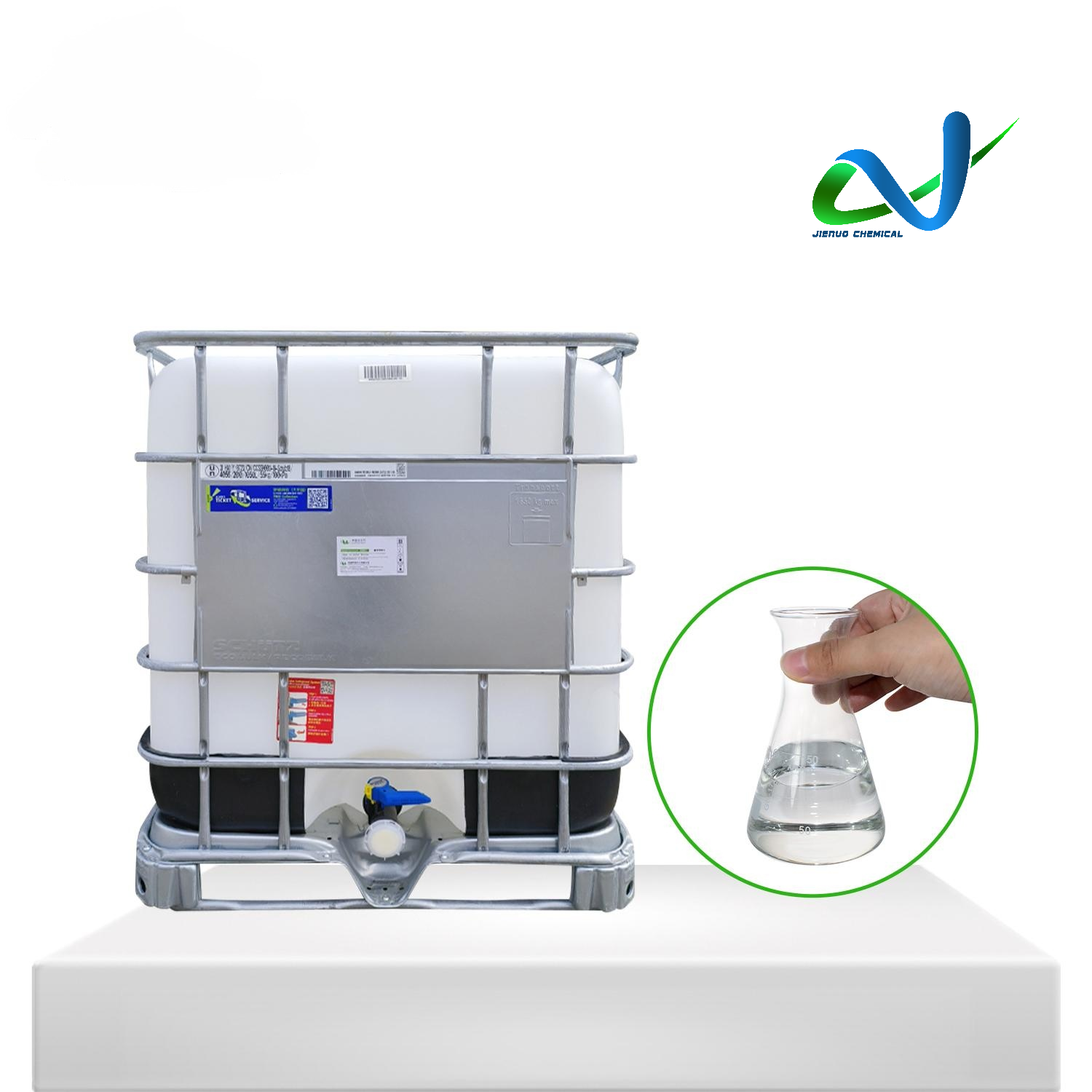
Once you abandon household detergents, you must choose a proper agricultural adjuvant. Manufacturers formulate different products for distinct environmental challenges. Selecting the correct category ensures maximum chemical efficiency and protects non-target plants.
This formulation represents the absolute industry baseline. The numbers refer to its composition: 80% active ingredient and 20% inert ingredients. The active portion reduces the surface tension of the water droplet. The inert portion typically includes helpful additives like defoamers or stabilizers.
We highly recommend 80/20 blends for general turf management and common post-emergent herbicides. It provides a highly cost-effective solution for large-scale spraying operations. If your herbicide label broadly calls for a standard adjuvant, this category is your safest, most reliable choice.
Organosilicones are premium "super-spreaders." They reduce surface tension to dramatically lower levels than standard 80/20 blends. A single droplet containing an organosilicone can spread over an enormous leaf area in seconds. They push liquids into the microscopic stomata of the plant.
These super-spreaders are best for dense brush, highly waxy leaves, and challenging environments. They are also ideal for conditions requiring rapid rainfastness. Because they dry and absorb so quickly, you can often apply them just hours before a forecasted rainstorm. However, their aggressive spreading nature means you must monitor your application rates closely to avoid excessive runoff.
While technically oil-based penetrants, COCs and MSOs often include nonionic emulsifiers. These emulsifiers allow the heavy oils to mix seamlessly into a water-based spray tank. Oils work differently than standard spreaders. They aggressively dissolve the waxy cuticles of target plants, driving the herbicide deep into the cellular structure.
We recommend COCs and MSOs for tough, woody weeds or late-season applications under drought stress. Weeds facing drought will thicken their waxy layers for survival. Oils cut through these thick defenses. However, you must exercise extreme caution. Using heavy oils during hot weather drastically increases the risk of severe plant burn.
Choosing the right product goes far beyond picking the cheapest bottle off the shelf. Smart applicators evaluate their options across several key performance and compliance metrics. Here is how you evaluate potential solutions for your operation.
You must always read your primary herbicide label first. The label is the law. Chemical manufacturers spend millions of dollars testing adjuvant compatibility. The label will explicitly dictate whether a specific adjuvant is legally and chemically mandated. Some herbicides require a standard 80/20 blend. Others strictly forbid organosilicones. Failing to check the label can result in wasted money or regulatory fines.
Many buyers mistakenly focus on the "price per jug." This is a flawed metric. Instead, you must evaluate the required mix rate. A cheaper jug might require 4 pints per 100 gallons to achieve efficacy. A premium product might only require 1 pint per 100 gallons. Always calculate your costs based on the application yield. Determine your cost per effective acre to find true operational savings.
Environmental stewardship dictates your purchasing decisions. You must assess aquatic safety carefully. If you spray near ponds, streams, or drainage ditches, you cannot use standard agricultural adjuvants. You must select products explicitly labeled and approved for aquatic use. Furthermore, check local agricultural compliance standards, as some regions strictly regulate volatile organic compounds (VOCs) found in certain formulations.
Efficiency matters during the mixing phase. Foamy tanks slow down operations and damage equipment. Evaluate whether the commercial product includes built-in anti-foaming agents. High-quality products almost always integrate premium defoamers. This seemingly small feature streamlines tank mixing and protects your expensive pumps from cavitation.
| Evaluation Dimension | What to Look For | Common Mistakes |
|---|---|---|
| Compatibility | Herbicide label requirements | Ignoring label warnings |
| Scalability | Mix rate per 100 gallons | Buying based solely on jug price |
| Compliance | Aquatic approval certifications | Spraying standard formulas near water |
| Defoaming | Integrated anti-foam agents | Adding soap and destroying the pump |
Procuring the right chemical is only half the battle. Executing a flawless application requires strict adherence to dosing mathematics and mixing protocols. Improper handling will quickly ruin a premium product.
You must follow the manufacturer's baseline dosing math carefully. For standard 80/20 blends, the typical application requires a 0.25% to 0.5% volume-to-volume ratio. If you operate a small 4-gallon backpack sprayer, this translates to roughly 1/3 to 2/3 ounce of adjuvant per gallon of water. Never guess your measurements. Always use a calibrated measuring cup. Adding too much product causes excessive runoff, wasting your chemical investment as it drips off the target leaves.
The order in which you pour chemicals into your tank determines the success of your emulsion. The agricultural industry relies on the W-A-L-E-S sequence for safe and effective tank mixing. You must memorize this order of operations:
Adding the adjuvant last is a non-negotiable rule. If you add it early, the agitation process will whip the tank into a massive foam pillar. By adding it at the very end, you prevent excessive foaming and keep your pump running smoothly.
Environmental conditions drastically alter chemical performance. You must address implementation risks related to heat. High heat accelerates the action of penetrants. If you apply strong adjuvants during high heat (typically above 85°F), the enhanced penetration can severely damage desirable turf. During peak summer temperatures, you should scale back your mix rates or schedule applications for the cooler early morning hours. Monitoring humidity is also crucial, as low humidity causes droplets to evaporate before they can properly penetrate the leaf.
Substituting purpose-built adjuvants with household soaps introduces unacceptable chemical and operational risks. Dish soaps neutralize your expensive herbicides, threaten your equipment with excessive foam, and risk stripping the natural defenses of desirable plants. Proper agricultural chemicals rely on neutral, non-reactive solutions to optimize surface tension without altering the primary active ingredients.
To optimize your next application, audit your current herbicide labels immediately to verify specific adjuvant requirements. Calculate your annual volume needs based on actual mix rates rather than raw jug volume. Finally, shortlist a commercial 80/20 blend or a silicone-based product from a reputable agricultural supplier. Making this operational shift guarantees better weed control, lower long-term chemical usage, and healthier turf.
A: No. While baby shampoo is milder than dish soap, it remains chemically inappropriate. It is typically amphoteric or anionic. Manufacturers formulate baby shampoo to clean human hair, not to suspend agricultural chemicals. It will still introduce unwanted charges, cause excessive foaming, and potentially interact negatively with your primary herbicide.
A: Not all weed killers require an additional adjuvant. Many popular products, including certain modern glyphosate formulations, come with surfactants pre-mixed in the jug. Adding extra adjuvant to a fully loaded product wastes money and increases the risk of turf burn. Always defer to the manufacturer label.
A: Excessive use lowers the surface tension too much. This causes the spray droplets to sheet off the leaf entirely, resulting in severe chemical runoff. You will waste expensive herbicide, pollute the surrounding soil, and risk unexpected phytotoxicity to nearby non-target plants.


