
English
Views: 0 Author: Site Editor Publish Time: 2026-07-09 Origin: Site


Formulating stable industrial mixtures presents a distinct set of hurdles. High electrolyte concentrations often break emulsions. Extreme pH levels create chemical stress. Hard water introduces hostile mineral ions. Achieving structural integrity requires specialized chemistry. A Nonionic Surfactant Emulsifier stands out as the standard solution here. It lacks an electrical charge. This chemical neutrality allows it to rely on steric hindrance for stability. Ionic agents frequently collapse under these harsh conditions. We rely on nonionic structures to bypass these limitations. This article moves beyond basic chemistry. We aim to give you a clear decision-stage framework. You will learn how to evaluate and select the right chemical compounds. We also show how to safely integrate them into your commercial product lines. Master these principles to protect your formulation from early phase separation.
Industrial formulators frequently migrate away from anionic and cationic options during scale-up. Moving from a benchtop beaker to a 10,000-liter mixing tank exposes physical vulnerabilities. You face significant financial risks if a formulation fails. Phase separation during transit ruins entire shipments. Temperature fluctuations in storage facilities quickly degrade unstable emulsions. Companies cannot afford these systemic product failures.
Chemical resilience drives the shift toward uncharged alternatives. The hydrophilic head of a nonionic molecule typically features a polyether chain. This uncharged head provides immunity to calcium and magnesium ions found in hard water. It also withstands broad pH fluctuations. Anionic surfactants often precipitate out of solution when they encounter these metallic ions. A Nonionic Surfactant Emulsifier maintains its structure entirely. It uses steric hindrance to keep oil droplets suspended. The bulky polyether chains physically block droplets from merging.
Synergistic use represents another common industry practice. Formulators rarely use a single surfactant class in complex mixtures. They blend nonionics alongside anionics to optimize the final product. This combination yields excellent temperature stability. It also boosts cost-efficiency. The nonionic component protects the anionic component from salt-induced precipitation. Together, they create a robust stabilization network. You get the fast-wetting properties of an anionic agent plus the deep resilience of a nonionic agent.
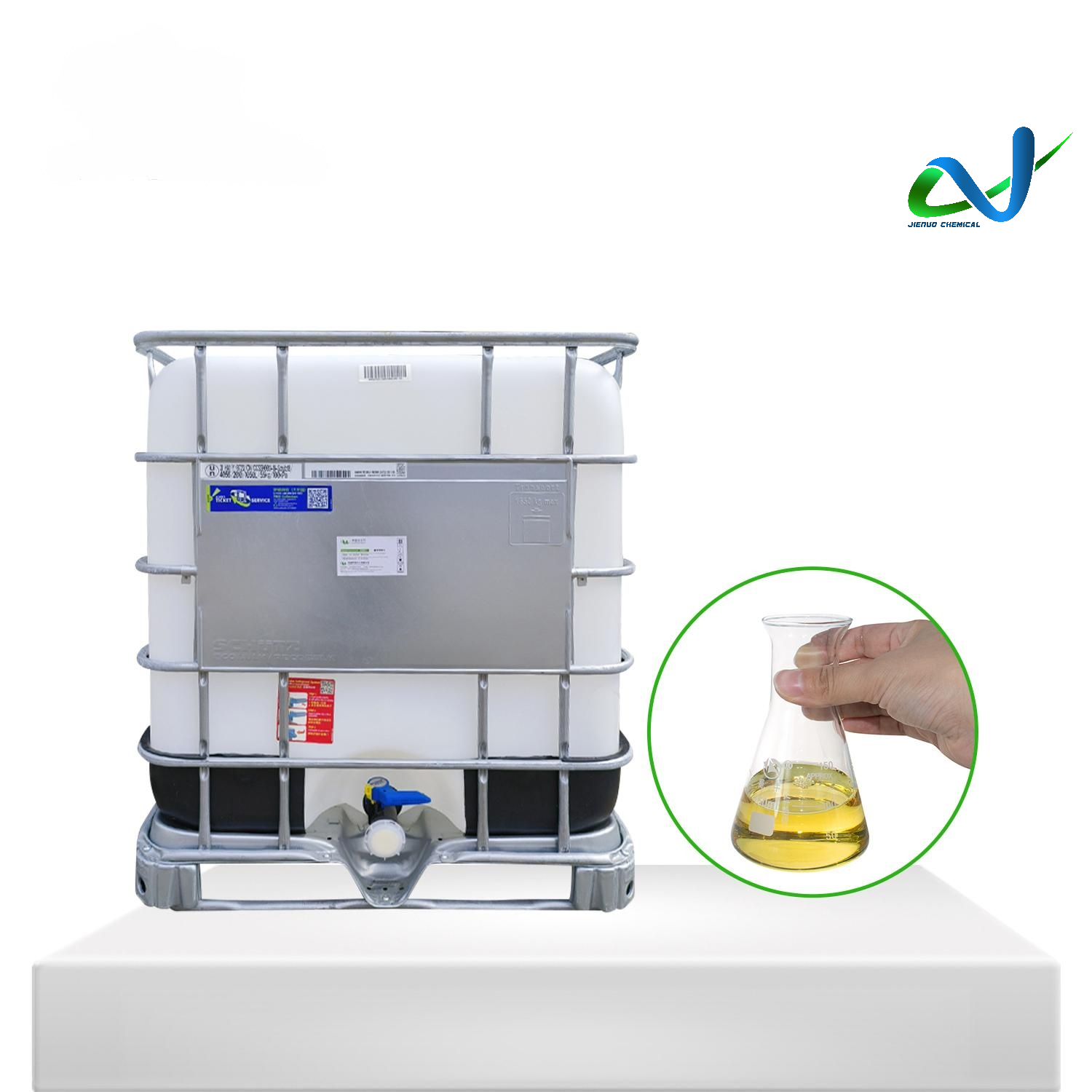
Different industries demand specific chemical structures. You cannot apply a universal solution across distinct manufacturing sectors. Evaluating the exact chemical class ensures proper structural matching.
Agrochemical formulations operate in hostile field conditions. Farmers mix these products into tanks containing untreated well water. Castor oil ethoxylates and alkylphenol derivatives excel here. They provide excellent tank-mix compatibility. They ensure proper active ingredient dispersion across leaf surfaces. Foliar wetting must occur without causing phytotoxicity to the actual crop. These specific nonionics lower surface tension just enough to spread the active ingredients safely.
Textile manufacturing requires rigorous scouring and cleaning steps. High foam generation disrupts high-speed textile machinery. Fatty alcohol ethoxylates offer the perfect low-foaming scouring solution. Mills use them for the emulsification of spinning oils. They also play a critical role in dye leveling. The emulsifier ensures dye molecules penetrate fabric fibers evenly. You avoid patchy coloration on the final textile rolls.
Architectural coatings depend on precise pigment dispersion. Pigments naturally want to clump together. Nonionics prevent this flocculation. They wet the pigment particles thoroughly. This action stabilizes the colorant within the liquid matrix. Furthermore, these agents improve freeze-thaw stability in architectural emulsions. If a paint can freezes during winter transport, the nonionic barrier prevents the polymer emulsion from breaking apart upon thawing.
Dermatological safety dictates cosmetic chemistry choices. Polysorbates and fatty acid esters dominate this space. Formulators use them to build low-irritation oil-in-water (O/W) creams and lotions. Sensory profiles matter immensely in personal care. Consumers reject sticky or greasy textures. These specific esters create a smooth, elegant skin feel. They deliver moisture while adhering strictly to global cosmetic safety regulations.
| Industrial Sector | Preferred Chemical Class | Primary Formulation Function |
|---|---|---|
| Agrochemicals | Castor Oil Ethoxylates | Tank-mix compatibility, active dispersion |
| Textiles & Leather | Fatty Alcohol Ethoxylates | Low-foaming scouring, dye leveling |
| Paints & Coatings | Alkylphenol Ethoxylates (Legacy) | Pigment wetting, freeze-thaw stability |
| Personal Care | Polysorbates & Fatty Acid Esters | Low-irritation O/W creams, sensory feel |
Selecting the right chemical requires systematic evaluation. Guesswork leads to rapid product degradation. We rely on established metric frameworks to narrow down our choices.
The Hydrophilic-Lipophilic Balance (HLB) scale ranges from 0 to 20. It dictates how an emulsifier behaves in a mixture. You must use this scale to shortlist candidates. Low HLB values (typically 4-6) favor water-in-oil (W/O) emulsions. High HLB values (typically 8-18) favor oil-in-water (O/W) emulsions. Demand exact target-matching for your formulation. Calculate the required HLB of your oil phase first. Then, blend multiple nonionics to hit that exact number. Blended systems usually provide tighter stability than single-molecule solutions.
Here is a quick reference chart for the HLB scale functions:
| HLB Range | Typical Application Function |
|---|---|
| 1 - 3 | Anti-foaming agents |
| 4 - 6 | W/O (Water-in-Oil) Emulsifiers |
| 7 - 9 | Wetting and spreading agents |
| 8 - 18 | O/W (Oil-in-Water) Emulsifiers |
| 13 - 15 | Detergents and active cleaners |
| 15 - 20 | Solubilizers for microemulsions |
Temperature profoundly affects nonionic behavior. We measure this via the cloud point. The cloud point is the specific temperature where the emulsifier becomes insoluble in water. The solution turns cloudy at this threshold. Once an emulsifier crosses its cloud point, it loses its stabilizing power. The emulsion will break. Formulators must select an emulsifier with a cloud point well above the intended operational temperature. You also need to account for peak storage temperatures during summer months. Always build a thermal safety margin into your selection.
Regulatory compliance acts as a core procurement metric today. You cannot launch a product using restricted chemicals. REACH requirements in Europe dictate strict registration protocols. The EPA Safer Choice program in the United States sets high safety bars. Industry mandates a mandatory shift toward readily biodegradable profiles. Environmental persistence is no longer acceptable. You must verify the ecological footprint of your chosen surfactant before committing to bulk purchases.
Deep operational expertise requires a skeptical mindset. Lab success does not guarantee manufacturing success. You must anticipate physical failures before they happen on the factory floor.
Heating changes everything. We must warn you about the Phase Inversion Temperature (PIT). This occurs during high-heat manufacturing processes. As you heat an O/W emulsion, the nonionic surfactant becomes more lipophilic. It loses its affinity for water. At a critical heat threshold, the entire system flips. Your O/W emulsion suddenly becomes a W/O emulsion. This ruins the batch. You must monitor thermal profiles continuously. Formulators sometimes use this phenomenon intentionally to create ultra-fine droplets, but accidental inversion destroys commercial batches.
Nonionic concentrations heavily impact final product rheology. A beaker mixture might flow perfectly. However, pumping that same mixture through factory pipes introduces shear stress. Moving from lab-scale to a 10,000-liter batch often exposes viscosity problems. Sometimes the emulsion becomes too thin. You will likely require secondary thickeners to maintain structural suspension. Carbomers or natural gums often accompany nonionic systems to lock the droplets in place physically. Always run rheology tests under high shear conditions.
Replacing legacy Nonylphenol Ethoxylates (NPEs) presents a massive engineering headache. Global regulators are banning these compounds due to aquatic toxicity. Formulators must find greener alternatives. However, you cannot sacrifice emulsion stability. You also cannot drastically increase raw material costs. Dropping in a linear alcohol ethoxylate rarely works perfectly on the first try. You will experience wetting deficits. You will need to tweak the co-solvents. Plan for an extensive R&D phase when executing an APE replacement project.
Procurement teams need a strict validation framework. Relying solely on basic Technical Data Sheets (TDS) invites risk. You must demand deeper empirical evidence from your suppliers.
Move beyond static laboratory data. Ask procurement and R&D to request dynamic surface tension data. This shows how quickly the surfactant acts during fast mechanical processes. You also need long-term stability testing results. Centrifuge tests simulate gravity separation over time. Thermal cycling (freeze-thaw testing) exposes structural weaknesses. A reliable Nonionic Surfactant Emulsifier must survive these aggressive physical challenges. Do not approve a raw material based on a single successful trial.
We recommend a phased testing approach. Follow these specific steps to isolate failures early:
Supplier consistency determines your long-term success. Evaluate a supplier's batch-to-batch variance closely. Pay specific attention to the degree of ethoxylation. Ethoxylation is a statistical reaction. The exact length of the polyether chain varies slightly in every batch. This variance directly impacts the exact HLB value. A widening HLB tolerance leads to unpredictable emulsion failures on your end. Audit your supplier's quality control reports. Demand tight specifications on their final molecular distribution.
Choosing the correct nonionic chemistry requires rigorous balance. You must weigh structural compatibility against thermal stability. Environmental compliance now dictates which molecules remain viable for long-term commercial use. Scale-up operations expose hidden rheological flaws. By combining precise HLB matching with aggressive mechanical testing, you can secure your formulation against costly phase separation.
Take the following steps to advance your development process:
A: The primary difference involves hydrolytic stability. Ester-based surfactants feature an ester linkage. This linkage can degrade or saponify in highly alkaline or highly acidic environments. Ethoxylated nonionic surfactants use robust ether linkages. These withstand extreme pH variations much better. Formulators use ethoxylates for aggressive industrial cleaners, while esters serve well in milder cosmetic applications.
A: Temperature drives inverse solubility in these chemicals. As heat increases, the polyether chains dehydrate. The surfactant loses its water solubility. This phenomenon culminates at the cloud point. Monitoring the cloud point is crucial. If the ambient temperature exceeds this point, the emulsion will destabilize and break apart completely.
A: Yes, they frequently are. Mixing them provides a dual stabilization mechanism. You gain both electrostatic repulsion from the charged surfactant and steric hindrance from the nonionic one. This combination creates highly robust emulsions. It also protects anionic surfactants from precipitating out when exposed to hard water environments.
A: Synthetic or natural fatty alcohol ethoxylates serve as the standard replacements. They offer comparable wetting and emulsification power with excellent biodegradability. However, an exact 1:1 drop-in replacement rarely works perfectly. You usually need minor formulation adjustments, such as modifying co-solvents or blending two different alcohols, to match the original NPE performance precisely.


