
English
Views: 0 Author: Site Editor Publish Time: 2026-07-08 Origin: Site


Industrial formulators face mounting pressure today. You must balance strict emulsion stability alongside rapidly tightening environmental regulations across global markets. Ionic surfactants certainly offer excellent charge-based stabilization under controlled conditions. However, formulators increasingly favor a Nonionic Surfactant Emulsifier for its exceptional hard-water tolerance and broad electrolyte compatibility. These uncharged molecules also provide highly versatile HLB (Hydrophilic-Lipophilic Balance) profiles tailored for complex fluid systems.
This guide intentionally bypasses basic chemistry concepts. Instead, we focus heavily on actionable commercial selection criteria. Procurement and R&D teams will learn to evaluate top chemical classes effectively. You will navigate critical regulatory phase-outs like NPEs seamlessly. Ultimately, we will help you shortlist the exact emulsifier required for your specific industrial applications.
Industrial manufacturing environments present harsh chemical realities. Metalworking fluids, robust agrochemicals, and heavy-duty industrial cleaning agents frequently encounter extreme pH levels. High electrolyte concentrations and hard water represent standard hurdles in these sectors. Under these aggressive conditions, traditional anionic and cationic surfactants often fail completely. They simply precipitate out of the solution. This precipitation ruins the formulation and causes equipment blockages.
A Nonionic Surfactant Emulsifier lacks an electrical charge in aqueous solutions. This fundamental trait means it strongly resists deactivation. Calcium and magnesium ions found in hard water cannot easily disrupt the emulsion. The formulation remains highly stable across much broader operational parameters.
Formulators rarely choose strictly between ionic and nonionic options. Instead, you must determine which specific nonionic chemical structure provides exact steric hindrance. This structural barrier physically prevents droplet coalescence. It locks the dispersed phase securely into your specific base oil or solvent. A common mistake is assuming any uncharged agent works universally. You must carefully map the chemical structure directly to the solvent's polarity.
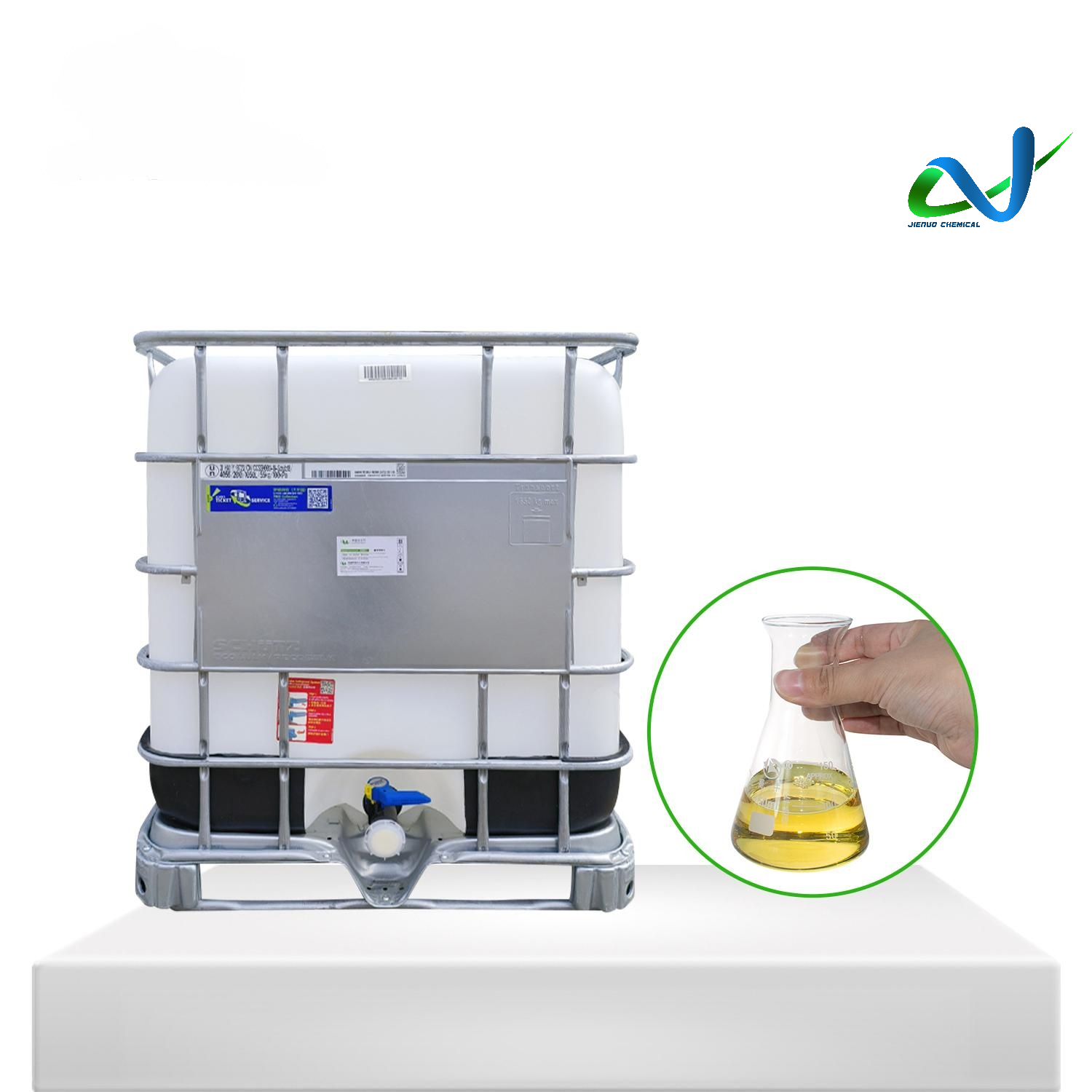
Fatty alcohol ethoxylates stand as the absolute standard for heavy-duty industrial cleaners and textile processing operations. They are highly versatile molecules. Manufacturers create them by reacting fatty alcohols directly with ethylene oxide.
They offer rapid wetting capabilities. You can highly tune their HLB based on the specific number of ethylene oxide (EO) moles added during synthesis. Furthermore, they exhibit rapid biodegradation profiles in wastewater streams. However, they can exhibit much higher foaming profiles. This foaming heavily depends on the specific carbon chain length selected.
These esters dominate food-grade industrial applications, precision cosmetics, and sensitive agrochemical formulations. You derive them from sorbitol and various fatty acids.
They boast an extremely safe toxicological profile. They are also universally excellent for forming highly stable oil-in-water (O/W) or water-in-oil (W/O) emulsions. Formulators achieve the best results when using them in specific Span and Tween pairs. Their primary limitation is a higher cost per kilogram compared to bulk commodity ethoxylates. They are also somewhat susceptible to rapid hydrolysis at extreme pH levels.
Historically, NPEs completely dominated industrial paints, protective coatings, and heavy machinery degreasers. They offered incredible performance and rock-bottom manufacturing costs.
Currently, they face strict regulatory bans globally. Environmental agencies target them due to severe endocrine disruption risks and extremely poor biodegradability. If your current proprietary formula relies on NPEs, you face a critical business continuity risk. Immediate evaluation of modern drop-in replacements is an absolute requirement.
Block copolymers incorporate both ethylene oxide and propylene oxide segments. They are tailored specifically for low-foam industrial processes. Common applications include mechanical dishwashing facilities and high-pressure metal cleaning lines.
They offer exceptional defoaming properties combined closely with high-performance emulsification. They act as distinct structural blocks rather than random chains. This structure allows precise control over thermal stability and surface tension reduction.
| Chemical Category | Primary Application | Key Strength | Main Limitation |
|---|---|---|---|
| Fatty Alcohol Ethoxylates (AEOs) | Industrial cleaning, textiles | Rapid wetting, highly tunable HLB | Variable foaming profiles |
| Sorbitan Esters (Spans/Tweens) | Agrochemicals, cosmetics | Exceptional toxicological safety | Hydrolysis risk at extreme pH |
| NPEs (Legacy) | Paints, heavy degreasers | Excellent legacy performance | Global regulatory bans |
| Block Copolymers (EO/PO) | High-pressure metal cleaning | Superior low-foam characteristics | Complex formulation matching |
Evaluating emulsifiers requires moving beyond basic technical data sheets. You must align the chemical properties directly with your operational realities. We recommend a structured, numbered approach to technical shortlisting.
| HLB Range | Emulsifier Functionality | Typical Industrial Application |
|---|---|---|
| 3 - 6 | W/O Emulsifier | Heavy corrosion inhibitors, specific agrochemicals |
| 7 - 9 | Wetting Agent | Surface treatments, dust suppression |
| 8 - 16 | O/W Emulsifier | Metalworking fluids, industrial degreasers |
| 13 - 15 | Detergent | Textile scouring, hard surface cleaning |
| 15 - 18 | Solubilizer | Fragrance solubilization, specialized coatings |
The global regulatory landscape is shifting aggressively. Navigating REACH guidelines in the EU and EPA restrictions in the US is no longer optional. Both agencies heavily restrict toxic breakdown products. NPEs break down into nonylphenol in the environment. This chemical acts as a potent aquatic toxicant and a known endocrine disruptor.
Do not look for a 1:1 chemical match when replacing legacy nonylphenol. You must look for a strict performance match instead. Formulators should actively assess narrow-range ethoxylates. Synthetic branched alcohol ethoxylates also provide excellent alternatives. They closely mimic the wetting and emulsification curves of traditional NPEs. Crucially, they deliver this performance without the associated environmental toxicity.
Supply chain security also demands immediate attention. Verify that your chemical manufacturer can provide completely transparent sustainability documentation. Ask for comprehensive life-cycle analysis (LCA) reports. Demand guaranteed continuous supply streams completely free from restricted precursor chemicals. A cheap replacement formulation offers zero value if regulatory agencies ban it next year.
Validating a new Nonionic Surfactant Emulsifier demands rigor. Transitioning successfully from lab formulations to massive industrial tanks requires multiple distinct phases. Never skip direct pilot testing.
Bench-scale validation comes first. Create deliberate HLB gradients using distinct blends. Combine a lipophilic and a hydrophilic nonionic emulsifier systematically. This blending strategy helps pinpoint the exact maximum emulsion stability for your specific base oil.
Next, you must conduct aggressive stress testing on the resulting formulation. Real-world storage and transport rarely offer climate-controlled safety.
Following technical success, perform a rigorous cost-in-use analysis. Cheaper bulk surfactants frequently require significantly higher dosing levels. Calculate your true ROI based strictly on the minimum effective concentration required. Measure this against the target stability duration.
Finally, initiate concrete next steps for your procurement team. Request all Technical Data Sheets (TDS) and Safety Data Sheets (SDS) immediately. Order standardized 1kg samples of your shortlisted products. This ensures your lab evaluation relies on production-grade chemistry rather than specialized bench batches.
Selecting the right nonionic surfactant emulsifier remains a delicate balance. You must weigh advanced chemistry, precise regulatory foresight, and ironclad supply chain reliability equally. Moving toward modern, highly biodegradable ethoxylates or tailored block copolymers guarantees long-term product viability.
Relying on outdated legacy formulations, particularly NPEs, poses massive compliance risks. Formulators should immediately audit existing product lines for restricted chemistries.
Engage with technical sales engineers today. Request a custom HLB matching analysis for your specific industrial base fluid. Proactive formulation ensures operational stability and global regulatory compliance.
A: Nonionic emulsifiers carry no electrical charge. This unique characteristic makes them highly resistant to hard water containing calcium and magnesium. They remain fully compatible with complex, high-electrolyte industrial formulations where anionic surfactants would rapidly precipitate and fail.
A: There is no single universal replacement. However, Fatty Alcohol Ethoxylates (AEOs)—particularly branched alcohol ethoxylates—are the current industry standard. They successfully mimic NPE performance in industrial cleaners and coatings while fully meeting strict environmental regulations.
A: First, identify the "Required HLB" of your specific oil or solvent phase. Then, select a nonionic surfactant, or a precise blend of two, whose combined HLB matches that exact number. This matching process achieves maximum emulsion stability.
A: Nonionic surfactants uniquely drop out of solution at high temperatures due to inverse solubility. If your industrial process routinely operates at 60°C, choosing an emulsifier with a cloud point of 50°C guarantees formulation failure and rapid chemical separation.


